Why Do Chinese Families Put Children’s Education Above Everything?
Why Do Chinese Families Put Children’s Education Above Everything?
Let me tell you about the most important job in China: being a student.
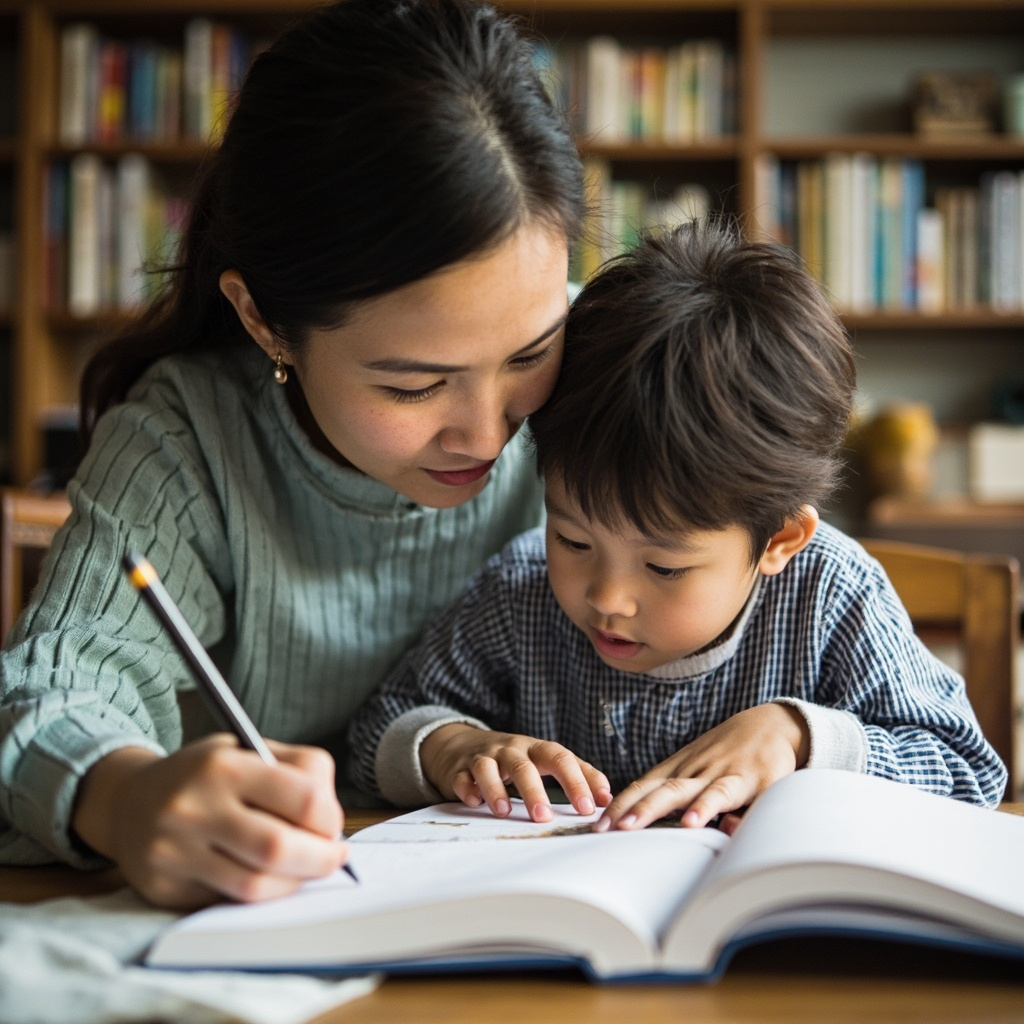
When I was in high school, my mother quit her job to accompany me to school. She made three meals a day, drove me to tutoring, and sat beside me while I did homework. She did this for three years.
This is not unusual. This is normal.
Foreigners hear stories like this and call it extreme. They call it helicopter parenting. They call it pressure. They call it unhealthy.
They do not understand.
Here is why Chinese families put education above everything.

## Education Was Always the Way Out
Here is the historical truth: for most of Chinese history, there was only one way for common people to change their fate.
You could not buy your way up. You could not network your way up. You could not start a tech company in your garage.
You could only pass the imperial examination.
The imperial examination system lasted over 1,300 years. It said: no matter how poor your family, if you study hard enough, you can become a scholar-official. You can change your family’s fortunes. You can move from peasant to power.
This idea is in our DNA now. Education is not just about knowledge. It is about mobility. It is about survival. It is about the only path forward.
## One Child, One Investment
Here is the demographic reality: most Chinese families have one child.
All your hopes. All your resources. All your future. Concentrated on one person.
When I was born, my parents made a calculation. They would pour everything into my education. Every spare yuan would go to tutoring. Every connection would be used for my benefit. Every sacrifice would be worth it if I could get a better future.
Foreigners call this pressure. We call it love.
How else do you show love when you can only have one child? You give them every advantage. You invest everything in their future.
## The Math Is Simple
Here is why families sacrifice so much: the math is simple.
A tutoring class costs perhaps 200 yuan per hour. My mother’s salary was 3,000 yuan per month. One hour of tutoring was one-sixteenth of her monthly income.
Foreigners might ask: is that worth it? For us, the question does not exist. There is no alternative. The competition is too fierce. The stakes are too high.
In China, one exam can determine your entire future. The gaokao – the university entrance exam – decides which university you attend. Which university you attend determines which company hires you. Which company hires you determines how much money you make. How much money you make determines what kind of life you live.
This is not metaphor. This is how it works.
## The Village Effect
Here is something foreigners do not understand: in China, education is not just family business. It is village business.
When my cousin’s daughter got into Peking University – China’s Harvard – the whole village celebrated. They gave money to help pay for tuition. They put her name on the village honor board.
Why? Because her success reflects on everyone. Her achievement means the village produced a talent. Her future connections will benefit the community.
In China, one person’s education lifts the entire family. Sometimes the entire village.
This is why grandparents chip in. This is why relatives lend money. This is why families go into debt for tutoring. The return on investment is not just for your child. It is for the whole family network.
## The National Obsession
Here is what surprises foreigners: this is not just family pressure. This is national pressure.
The Chinese government knows that education makes the country stronger. They invest billions in schools. They built the largest higher education system in the world. They created gaokao as the great equalizer – anyone can succeed through study.
This national commitment shapes culture. Parents hear the same message everywhere: education is the key. Study hard. Succeed. Serve the country.
When the whole society believes this, the pressure compounds. You are not just competing with your classmates. You are competing with 10 million students every year.
## Why We Do Not Feel Oppressed
Foreigners look at Chinese students and see victims. They see pressure. They see stress. They see a system that crushes creativity.
They do not see us.
I do not feel oppressed by my family’s investment in my education. I feel supported. I feel that my family believes in me. I feel that my future matters to people who love me.
Yes, the competition is fierce. Yes, the hours are long. Yes, the stress is real.
But here is what foreigners miss: we also see the results. We see classmates who studied hard and got into top universities. We see families who sacrificed and changed their fortunes. We see the system working.

## The Cost We Pay
I will not pretend there is no cost.
Some students crack under the pressure. Some families fall apart from the stress. Some children resent their parents for the weight of expectation.
I have seen friends whose entire identity became their test scores. I have seen families where love felt conditional on academic performance. I have seen students so burned out they lost all joy in learning.
This is the dark side. We know it. We talk about it. We try to fix it.
But we keep going anyway. Because the alternative – giving up, falling behind, accepting less – feels worse.
## The Truth
So why do Chinese families put children’s education above everything?
Because for 1,300 years, education was the only way up. Because with one child, all hope is concentrated. Because the math is simple: invest now, payoff later.
Because the village depends on each child’s success. Because the nation tells us education is the key. Because we have seen the system work.
The next time someone asks you why Chinese families invest so much in education, tell them: because we have no choice. Because we have seen what happens when we do not. Because in a country of 1.4 billion people, the only way to stand out is to study harder than everyone else.
And tell them this too: it is not just pressure. It is love. It is sacrifice. It is hope.
It is what families do for each other in a country that taught us education is the only sure path forward.
