Why Do Giant Pandas Exist Only in China?

The giant panda is one of the most recognizable animals on Earth, instantly beloved for its distinctive black and white markings and gentle demeanor. Yet if you want to see a giant panda in the wild, there is only one place in the world you can go: China. But why are pandas only found in China? The answer involves millions of years of evolution, geography, and a remarkable survival story.

The Evolutionary History of Giant Pandas
Giant pandas (Ailuropoda melanoleuca) have existed on Earth for approximately 2 to 3 million years. Their ancestors were actually meat-eaters, part of the bear family that adapted to a vegetarian diet over millennia.
The most significant evolutionary development for pandas was their adaptation to bamboo. About 4.2 million years ago, the ancestor of the modern giant panda began developing a special wrist bone – called a sesamoid bone – that functions like a sixth thumb. This adaptation allowed pandas to grip and manipulate bamboo stalks with remarkable precision, making them the only bear species to adopt an almost exclusively herbivorous diet.
However, this specialization came at a cost. Pandas now require 26-84 pounds (12-38 kg) of bamboo every single day to survive. This dietary specialization made them extremely vulnerable to environmental changes.
Why China Became the Only Home

Geographic and climatic factors combined to make China the last refuge of giant pandas:
- Bamboo forests – China contains about 300 of the worlds 1,400 bamboo species. The specific bamboo species that pandas eat – particularly arrow bamboo and umbrella bamboo – grow primarily in the mountainous forests of Sichuan, Shaanxi, and Gansu provinces.
- Geographic isolation – During the last Ice Age, glaciers covered much of northern Asia and Europe. These ice sheets created physical barriers that isolated pandas in the mountainous regions of central China, which were protected from the harshest glacial conditions.
- Climate stability – The mountains of Qinling, Daxiangling, and Xiaoxiangling provided a stable climate with consistent rainfall, perfect for bamboo growth over millions of years.
- No predators – Adult giant pandas have no natural predators in their mountain habitat. Their only real threats came from humans and habitat loss.
The Ancient Connection: Pandas in Chinese History
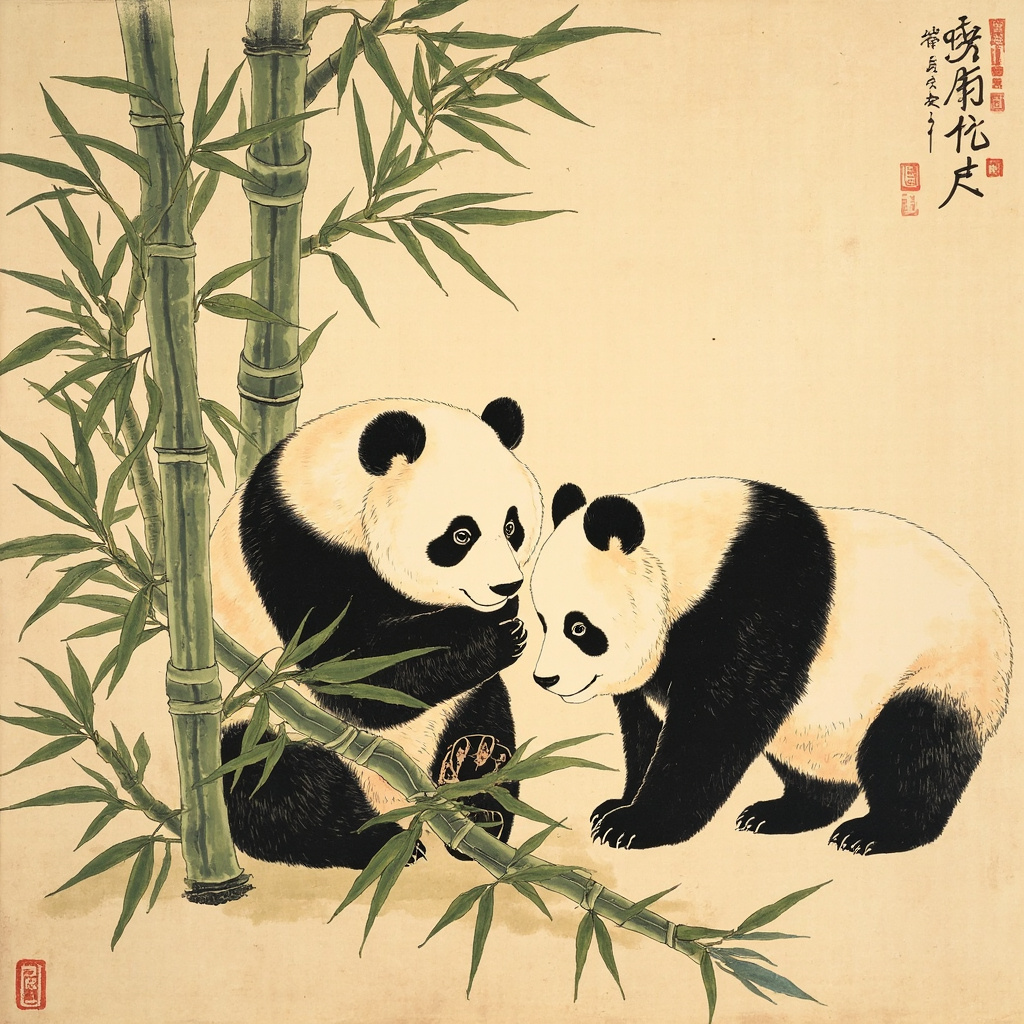
Pandas have been recognized in Chinese culture for millennia. Historical records show:
- 300 BCE – Pandas were mentioned in ancient Chinese texts as bianfu, meaning shield-bear
- Han Dynasty (206 BCE – 220 CE) – Emperor Wen Zhang kept pandas in his imperial garden
- Tang Dynasty (618-907 CE) – Emperor Xuanzong sent pandas as diplomatic gifts to Japan
- Modern era – Pandas became a symbol of wildlife conservation worldwide
Unlike many animals that went extinct as human civilization expanded, pandas survived because their mountain habitat was too rugged for dense human settlement.
The Conservation Challenge
Today, giant pandas face a critical situation. Their habitat has been fragmented by:
- Agriculture – Deforestation for farmland reduced panda habitat by over 40%
- Infrastructure – Roads and railways cut through bamboo forests
- Tourism – Development in mountainous areas impacts habitat connectivity
- Low reproduction rate – Females are fertile only 2-3 days per year, making population recovery extremely slow
By the 1990s, the wild panda population had fallen to around 1,000 individuals. The Chinese government established a network of reserves covering 67% of the remaining panda habitat, and breeding programs have helped increase the wild population to approximately 1,800 today.
Why Pandas Matter Beyond Being Cute
Pandas serve as an umbrella species for conservation. Protecting panda habitat automatically protects:
- Thousands of other species endemic to the same forests
- Critical watersheds that provide drinking water for millions
- Forest ecosystems that sequester carbon and regulate climate
This is why international conservation efforts have invested heavily in panda protection – the benefits extend far beyond saving one species.
Diplomatic Pandas
China has famously used pandas as diplomatic gifts – a practice called panda diplomacy. Starting in the 1950s, China gifted pandas to friendly nations as symbols of goodwill. This practice evolved into the current loan program, where pandas are sent to zoos worldwide under research agreements.
Pandas sent abroad typically live for 10-15 years under these programs, and any cubs born abroad remain Chinese property. This careful management reflects how precious and strategically important pandas are to China.
The Bottom Line
Why do giant pandas exist only in China? Because millions of years of evolution, geography, and climate aligned perfectly in the mountainous forests of central China to create the ideal habitat for these remarkable creatures.
Pandas are not just cute animals – they are living fossils that survived ice ages, adapted to a bamboo diet, and persisted when most of their relatives went extinct. Today, they stand as both a symbol of Chinese wildlife heritage and a global conservation success story.
And for those of us outside China, the best way to help pandas survive is to support conservation efforts and appreciate them from a respectful distance – in zoos, documentaries, and by supporting organizations that protect their mountain homes.
