Why Do Chinese Characters Look Like Pictures?
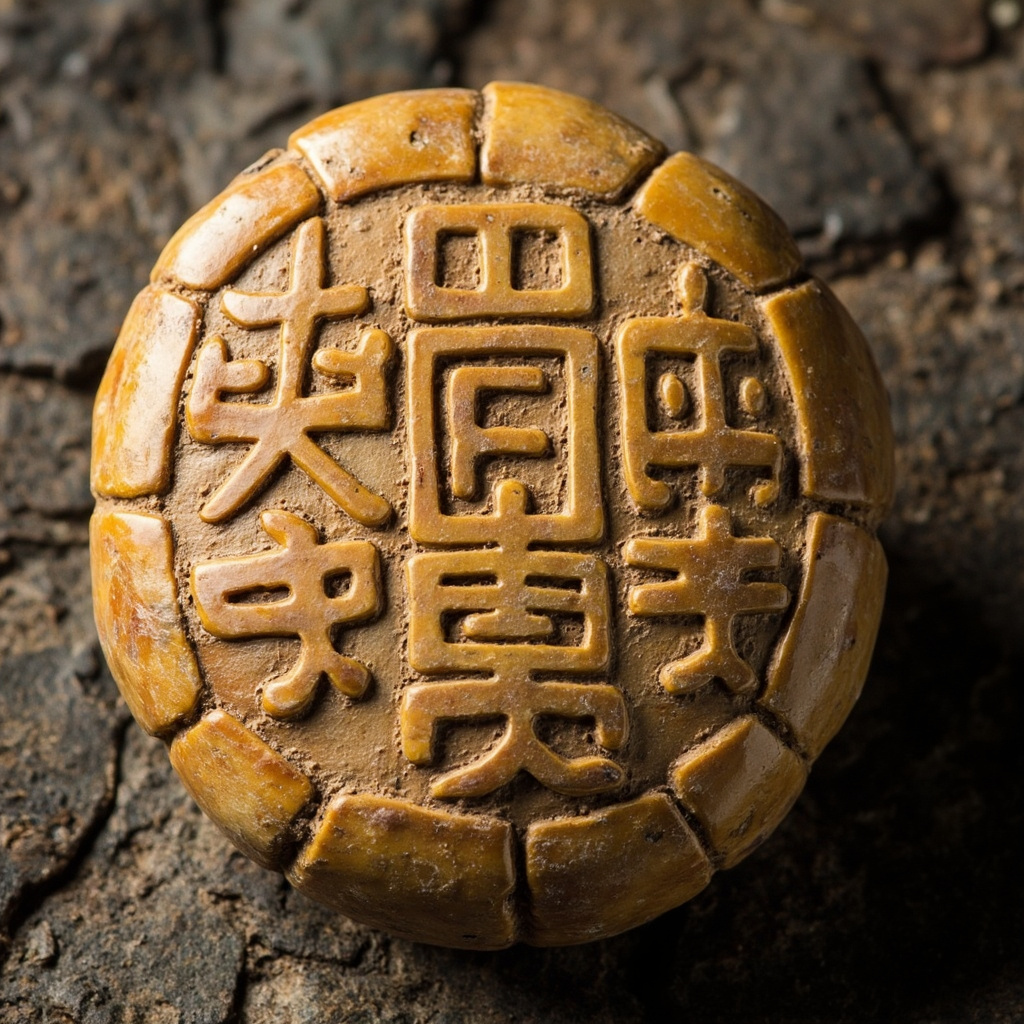
Take a look at a Chinese character like 山 (shan) – it literally looks like three mountains. Or 水 (shui) – it looks like water flowing. Or 人 (ren) – it looks like a person. You do not need to speak Chinese to guess what these characters mean. They look like pictures.
But why? Why do Chinese characters look like pictures while English letters look like… abstract squiggles?
Because They Started as Pictures
Here is the thing: Chinese characters did not start as abstract symbols. They started as actual drawings of things.
Archaeological evidence shows that around 4000 BCE, people in what is now China were making marks on pottery that looked like pictures of things – animals, plants, natural features. These were not quite writing yet, but they were the raw material that would eventually become writing.
By the time we get to the Shang Dynasty (around 1600-1046 BCE), we have actual characters carved on oracle bones – the so-called oracle bone script. These characters are clearly pictorial. You can see the original pictures they came from, even if they have become more stylized over time.
Compare this to English. English letters came from Phoenician consonants, which came from Egyptian hieroglyphs, but the connection to pictures was lost thousands of years ago. Chinese characters never lost that connection – or at least, they kept it much longer and much more visibly.
The Legend of Cangjie
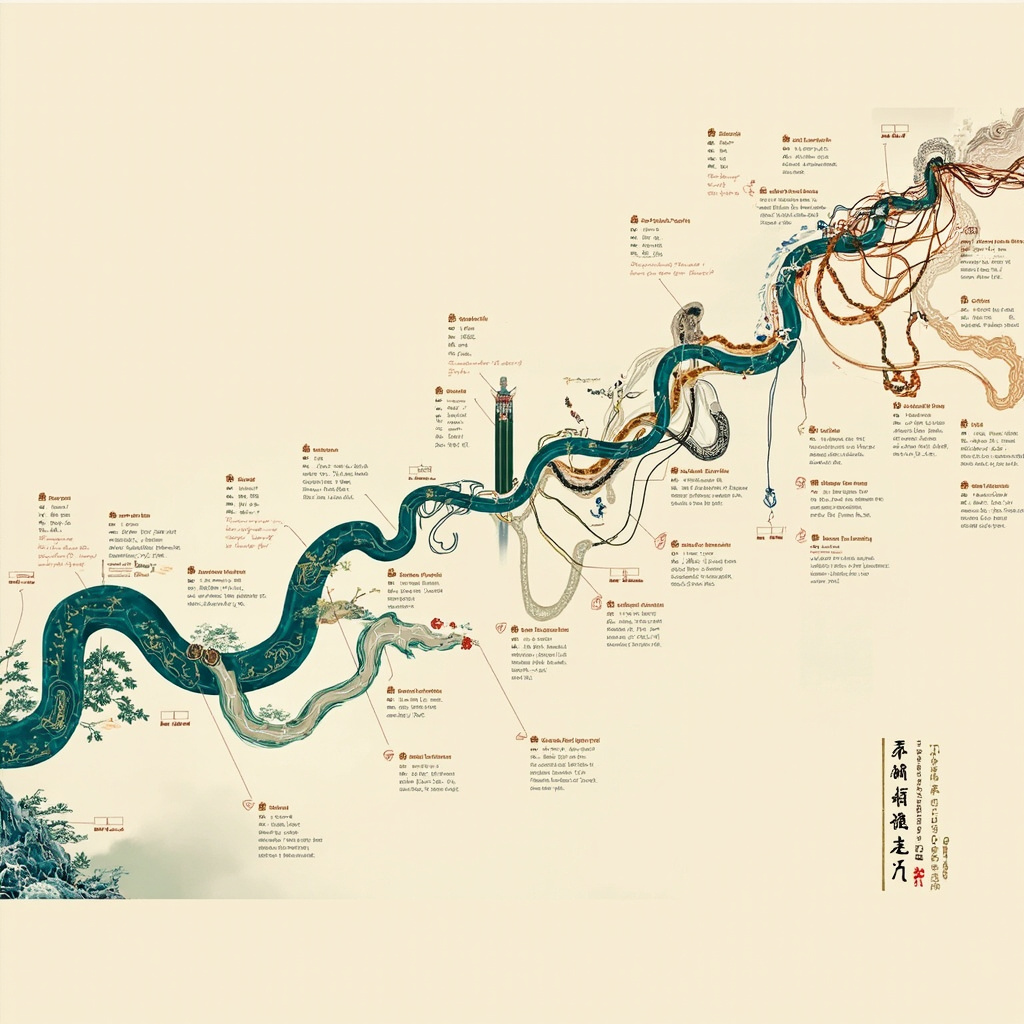
Chinese tradition says that characters were invented by a historical figure named Cangjie around 2700 BCE. The story goes that Cangjie was a historian or official who observed tracks made by birds and animals, marks on the ground, and other natural patterns, and used these as the basis for creating written symbols.
Modern scholars view Cangjie as probably a real person who organized or standardized writing rather than inventing it from scratch. But the legend captures something true: Chinese characters emerged from observation of the physical world and the desire to represent that world symbolically.
Not All Characters Look Like Pictures
Here is where it gets more complicated. Not all Chinese characters look like pictures. In fact, most do not.
Characters like 山, 水, 人 are called pictographs – they look like what they represent. But there are also:
- Ideographs – Characters that represent abstract concepts through symbolic arrangements. For example, 上 (shang, up) and 下 (xia, down) use horizontal lines to show relative position.
- Phono-semantic compounds – The vast majority of Chinese characters combine a component that suggests meaning with a component that suggests pronunciation. These are not picture-like at all.
So when people say Chinese characters look like pictures, they are really talking about the pictographic origin and visual appearance of Chinese writing – the fact that each character occupies a square space and often contains visually suggestive components.
The Logic of the System
Despite the complexity, there is a logic to Chinese characters that makes them learnable. The key is understanding that most characters are built from a limited set of components (around 200-300 basic ones), combined in predictable ways.
For example, the character 好 (hao, good) is made from 女 (nu, woman) + 子 (zi, child). The combination suggests something positive – a woman with a child. This makes sense intuitively once you know the components.
This is different from English, where the relationship between spelling and meaning is completely arbitrary. In Chinese, there is often a visual logic that can help with memorization and understanding.
Why They Did Not Become an Alphabet
One question that comes up: why did Chinese writing stay character-based while most other writing systems became alphabets?
The short answer is geography and history. Chinese civilization developed in relative isolation, without the kind of contact and borrowing that spread alphabets throughout the Middle East and Europe. When Buddhism brought Indian scripts to China, the existing character system was already too entrenched to replace.
Also, there is something practical about characters for a language with many homophones. Chinese has roughly 400 syllables (depending on how you count), compared to thousands in English. Without characters, communication would be extremely ambiguous. Characters solve this problem by providing visual distinctions that pronunciation alone cannot.
Learning to Read Without Knowing the Sound
Here is something that blows peoples minds: you can read Chinese text without being able to pronounce it.
Because Chinese characters encode meaning more directly than sound, a literate Chinese person can read text in a dialect they do not speak. This is why someone from Guangdong who speaks Cantonese can read the same newspaper as someone from Beijing who speaks Mandarin – the characters are the same, even though the sounds are different.
This would be impossible in English. If you do not know how a word sounds, you cannot read it. But in Chinese, the visual symbol carries meaning independent of pronunciation.
Are Pictures the Future?
Some people predict that Chinese characters will eventually be replaced by alphabets – either romanization (Pinyin) or something else. China has tried various reforms over the years to simplify or romanize the writing system.
But characters have proven remarkably resilient. They have been in use for over 3,000 years and show no signs of disappearing. The Chinese government has simplified characters twice (in 1956 and 1977), but the full traditional character set remains in use in Taiwan, Hong Kong, and among overseas Chinese.
There is something about characters that people find valuable beyond mere communication – a connection to history, to literature, to cultural identity. The fact that you can read a text from 1000 years ago with minimal difficulty (compared to English, which is essentially unreadable from 1000 years ago) creates a sense of continuity with the past that characters seem to embody.
The Takeaway
Why do Chinese characters look like pictures? Because they started as pictures 4,000 years ago and never fully abandoned their visual, meaning-based approach to writing.
Understanding this helps explain a lot about Chinese language and culture – why the writing system is so difficult to learn, why Chinese literature has such a strong visual dimension, why Chinese calligraphy is considered a high art form.
Characters are not just a communication system – they are a window into how Chinese civilization sees the world: visually, holistically, and with deep attention to the connection between symbols and meaning.
