Why Do Chinese People Love Tea So Much?
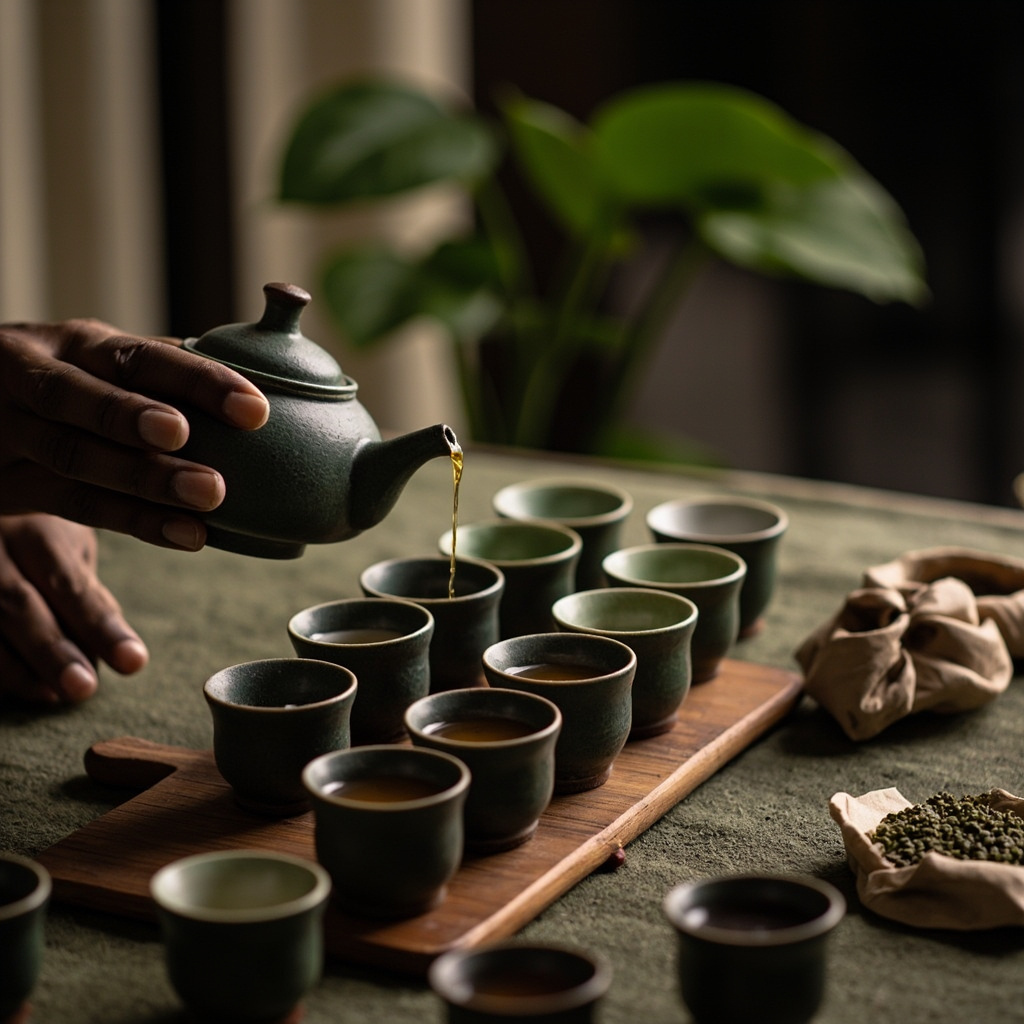
If you have ever been to a Chinese persons home, you probably noticed the tea. It does not matter if you came for a business meeting or a family dinner – there will be tea. Hot tea, served in small cups, refilled constantly, treated as an essential part of hospitality rather than an optional extra.
China is not technically the biggest tea consumer per capita anymore (that title belongs to countries like Turkey or Ireland), but tea still permeates Chinese life in ways that would surprise most Westerners. So why do Chinese people love tea so much?

It Goes Back Over 5,000 Years
According to legend, tea was discovered by Shen Nong (神农), the Divine Farmer and ancient Chinese ruler, around 2737 BCE. The story goes that he was boiling water under a tea tree when leaves fell into his pot. He tasted the result, found it refreshing, and tea drinking was born.
Historians debate whether Shen Nong was a real person, but archaeological evidence suggests tea has been consumed in China for at least 5,000 years. The oldest actual tea leaves found archaeologically date to around 200 BCE, but written references to tea appear in texts from the Han Dynasty (206 BCE – 220 CE).
So Chinese people have literally been drinking tea for longer than most civilizations have existed.
Tea Was First Medicine, Then Food, Then Drink
The interesting thing is that tea did not start as a beverage. Its evolution went something like this:
- Medicinal – First, tea was used as medicine. The early text Shen Nong Bencao Jing lists tea as able to cure various ailments
- Food – For a period, tea leaves were eaten directly or cooked with other foods. Some ethnic minorities in China still eat tea this way
- Drink – Eventually, people discovered that brewing tea leaves made more sense – less bitter, more refreshing
This medicinal origin explains why Chinese people often talk about tea in terms of health benefits rather than just taste.
Lu Yu and the Tea Classic
In the 8th century CE, a remarkable figure named Lu Yu wrote the Cha Jing (茶经) – The Classic of Tea. This was the first comprehensive guide to tea cultivation, preparation, and appreciation.
Lu Yu is to tea what the sommelier is to wine – except his influence is much, much greater. The Cha Jing established tea as a cultural practice with philosophy, technique, and aesthetics. After Lu Yu, tea drinking was no longer just about consuming a beverage – it was about cultivating oneself spiritually.
The book covers everything from water quality to teapot materials to the proper temperature for brewing different teas. This systematization elevated tea from daily consumption to high art.
The Philosophy of Tea
Tea culture in China developed its own philosophy, often associated with Zen Buddhism. The concept of chanyou yi wei – tea and Chan (meditation) are one taste – captures this perfectly.
The ideals associated with tea are:
- Harmony (和) – Balance in life, balance in the cup
- Respect (敬) – For the tea, for the process, for others
- Purity (清) – Cleanliness of tea, of water, of mind
- Tranquility (寂) – Stillness in a busy world
This philosophical dimension separates Chinese tea culture from simply drinking a hot beverage. Tea becomes a practice, a form of meditation, a way of being present.
Tea as Social Lubricant
Beyond personal practice, tea serves a crucial social function in China. In Fujian Province, there is a saying: wo cha wo ti, ni bu chi cha – if you come to my house and I do not serve you tea, I have no manners.
Tea acts as a social lubricant in several ways:
- Visiting someones home? Tea will be served immediately
- Business meeting? Tea is poured and refilled throughout
- Conflict resolution? Lets discuss over tea
- Making friends? Lets have tea together
The act of preparing and serving tea creates a pause in social interaction. It gives people something to do with their hands, creates shared ritual, and signals that this is a civil encounter rather than a confrontation.
The Health Angle
Chinese people often cite health reasons for drinking tea, and modern research has partially validated these claims:
- Tea contains polyphenols and antioxidants that may reduce inflammation
- L-theanine in tea promotes relaxation without drowsiness
- Traditional Chinese medicine recommends tea for digestion and detoxification
- Studies suggest regular tea drinkers may have better cardiovascular health
Whether these benefits are proven or not, the belief that tea is healthy is widespread and reinforces the habit.
It Is Just Part of Life
Perhaps the simplest explanation is that tea has been part of Chinese life so long that it is no longer a choice – it is simply what you do.
Just as you might drink coffee out of habit in the morning, many Chinese people drink tea without thinking about it. It is available everywhere – at home, in restaurants, in offices, in teahouses that have existed for generations.
Tea is so integrated into Chinese life that refusing tea when offered can seem rude. It is not just a drink – it is a social ritual, a sign of hospitality, and a connection to thousands of years of tradition.
The Takeaway
Why do Chinese people love tea? Because tea has been part of Chinese civilization for over 5,000 years. Because it was systematized by Lu Yu into a cultural practice with philosophical depth. Because it serves social functions that nothing else quite replaces. Because health beliefs reinforce the habit. Because it connects modern Chinese people to their ancestors and their heritage.
When you drink tea in China, you are not just having a beverage. You are participating in one of the oldest continuous beverage traditions on Earth.
