
Why Is the Tangram So Popular in China?
Why Is the Tangram So Popular in China?
Here is what you find in Chinese toy stores, educational catalogs, and puzzle collections: seven simple geometric pieces that can be rearranged into thousands of different shapes. The tangram puzzle, called七巧板 in Chinese, has captivated puzzle enthusiasts for centuries. This elegant puzzle combines mathematical challenge with creative expression in a way that suits Chinese aesthetic preferences perfectly.
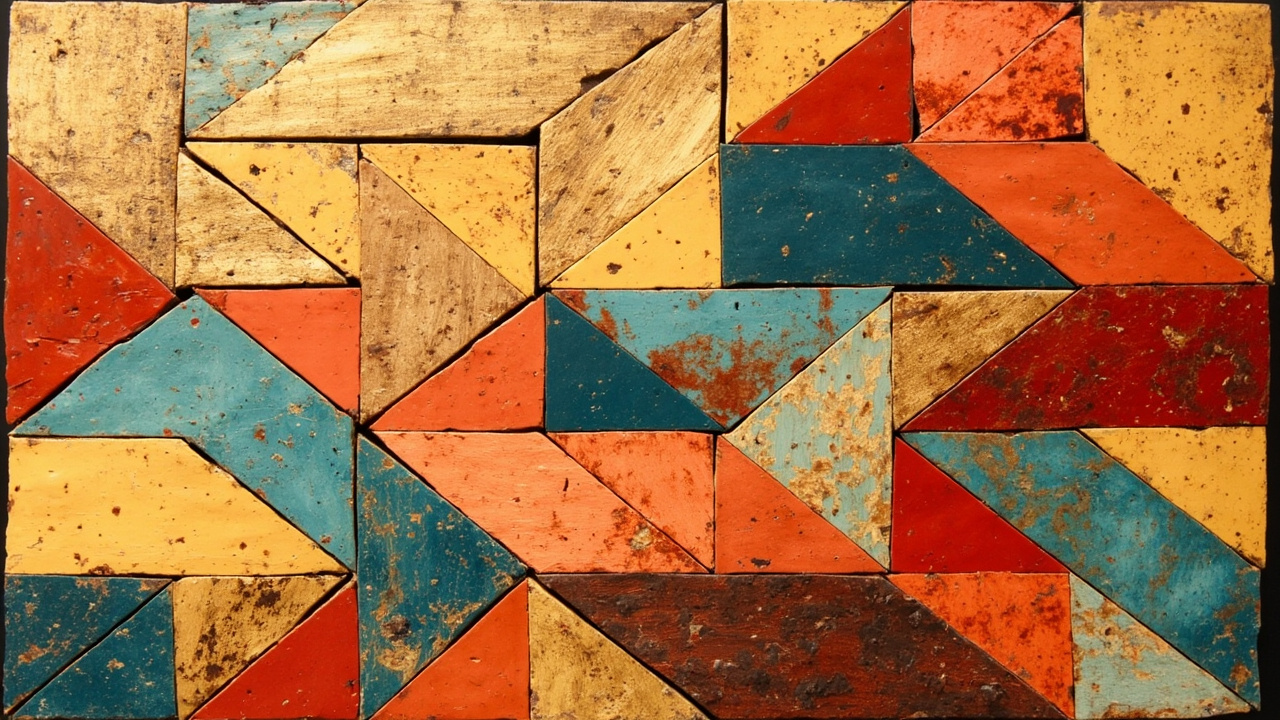
The tangram consists of five triangles, one square, and one parallelogram. These seven pieces can be arranged to form an almost infinite variety of shapes, from animals to people to abstract forms. The mathematical elegance and creative flexibility explain the puzzle’s enduring popularity in China.
Chinese children learn to solve tangram puzzles as part of their early education. The puzzle develops spatial reasoning, geometric intuition, and creative thinking. Adults continue engaging with tangram as relaxing entertainment and mental exercise. The puzzle serves multiple purposes across age groups.
Understanding why requires examining the tangram’s historical development in China, the mathematical principles it embodies, and its cultural fit with Chinese educational philosophy.
## Historical Origins
Here is where the tangram originates: Chinese innovation in puzzle entertainment.
The precise origins of the tangram remain debated among historians. The most widely accepted theory suggests the puzzle emerged during the Song Dynasty (960-1279 CE), when Chinese scholars began exploring geometric dissection puzzles. These early versions likely differed from modern tangrams but established the foundational principles.
The name tangram likely derives from the Chinese word tang, referring to the Tang Dynasty, combined with the English suffix -gram meaning picture or drawing. This etymological suggestion implies the puzzle dates to Tang Dynasty origins, though concrete evidence remains elusive.
The puzzle gained widespread popularity during the Qing Dynasty (1644-1912 CE), when printed tangram manuals circulated throughout China. These publications contained hundreds of tangram shapes with their solutions, spreading the puzzle across social classes. The print technology of the era enabled mass production and distribution.
European traders and missionaries encountered tangram in China during the late 18th century and brought it back to Europe. The puzzle spread rapidly through Western countries, gaining popularity among mathematicians, educators, and puzzle enthusiasts. This international circulation paradoxically increased the puzzle’s status within China.
## The Mathematical Elegance
Here is what makes tangram mathematically fascinating: geometry made tangible.
The seven tangram pieces are all derived from a single square divided according to specific proportional relationships. The smallest triangles are quarter-squares. The medium triangle is one-eighth of the square. The large triangles are one-quarter squares. This systematic derivation creates pieces that combine with perfect geometric harmony.
Every tangram piece can be formed through combinations of the smallest triangle unit. This modularity means all pieces relate mathematically to each other. The resulting proportions allow smooth connections between pieces when forming shapes.
The tans, as individual tangram pieces are called, illustrate fundamental geometric theorems visually. The Pythagorean theorem can be demonstrated through tangram arrangements. These visual proofs make abstract mathematical relationships concrete and understandable.
Approximately 6,500 distinct tangram configurations have been documented, though some researchers suggest the true number of solvable shapes exceeds 10,000. This vast solution space ensures that puzzle enthusiasts can enjoy tangram for years without exhausting its possibilities.
## Cultural Fit with Chinese Education
Here is why tangram suits Chinese learning philosophy: hands-on geometric exploration.
Traditional Chinese education emphasizes mastery through repetitive practice. Tangram provides perfect vehicle for this pedagogical approach, as solving different shapes requires repeated application of geometric principles. Students develop intuitive understanding of spatial relationships through direct manipulation.
The puzzle cultivates patience and attention to detail, values emphasized in Chinese educational traditions. Finding the exact arrangement to match a target shape requires careful observation and precise placement. These skills transfer to other academic pursuits requiring similar precision.
Tangram bridges concrete manipulation and abstract thinking. Students physically handle pieces while mentally visualizing arrangements. This combination of practical and theoretical engagement suits Chinese preferences for grounded, applicable learning.
Educators use tangram to teach fractions, geometry, and problem-solving systematically. The puzzle’s mathematical structure provides concrete representation of abstract concepts. Students who struggle with symbolic mathematics often excel when working with tangram visually and spatially.
## The Creative Dimension
Here is what makes tangram creatively fulfilling: artistic expression through geometric constraint.
Tangram challenges require both analytical thinking and creative imagination. Solvers must identify how target shapes relate to available pieces, requiring both logical deduction and intuitive insight. This combination engages multiple cognitive modes simultaneously.
The artistic possibilities of tangram extend beyond solving predefined shapes. Creative solvers can invent original configurations limited only by imagination. These original designs become new puzzles for others to solve, creating ongoing creative dialogue within the tangram community.
Tangram appeals to different personality types in different ways. Analytical solvers enjoy finding the single correct solution to given shapes. Creative solvers prefer inventing new configurations. This dual appeal broadens the puzzle’s audience across psychological types.
The aesthetic appreciation of tangram arrangements reflects Chinese artistic sensibilities. The balance of shapes, harmony of proportions, and negative space within configurations parallel principles of traditional Chinese painting and calligraphy. This aesthetic alignment explains the puzzle’s cultural resonance.
## Therapeutic Applications
Here is how tangram serves wellness purposes: puzzle as meditation and rehabilitation.
The focused attention required for tangram solving creates meditative mental state. The narrow focus on geometric relationships temporarily displaces everyday concerns. This mental break provides genuine rest for the cognitive system.
Occupational therapists use tangram in rehabilitation settings for stroke recovery and cognitive rehabilitation. The puzzle’s gradual difficulty progression allows therapists to adjust challenge level to patient capability. The satisfying nature of completed shapes provides motivational reinforcement.
Elderly Chinese commonly engage with tangram as mental exercise to maintain cognitive function. The puzzle’s demands on spatial reasoning help preserve these cognitive capacities. Research suggests such mentally stimulating activities contribute to cognitive health in aging populations.
Children with learning differences often benefit from tangram as alternative pathway to geometric understanding. The hands-on, visual approach reaches learners whom symbolic mathematics fails to engage. This inclusive design makes tangram valuable educational tool.
## Traditional Games and Competition
Here is how competitive tangram culture developed: challenge and mastery.
Tangram solving competitions test speed and accuracy under pressure. Competitors race to solve predetermined shapes as quickly as possible. These contests attract participants who enjoy the adrenaline of competitive puzzle solving.
Traditional Chinese traveling performers called tangram masters demonstrated extraordinary solving abilities. These skilled practitioners could solve complex configurations from memory while performing. Their feats inspired generations of aspiring tangram enthusiasts.
Modern speedcubing-style communities have developed around competitive tangram solving. Online platforms host competitions and maintain world records for solving various tangram configurations. These communities keep competitive tangram culture vibrant and evolving.
The pursuit of tangram mastery follows patterns familiar from Chinese学习 culture. Beginning solvers master basic shapes before progressing to complex configurations. Advanced solvers memorize solution patterns and develop rapid visualization techniques. This structured progression provides clear path for skill development.
## Modern Digital Adaptations
Here is how tangram has evolved in the digital age: tradition meets technology.
Mobile applications have brought tangram to smartphone and tablet screens. These digital versions often include thousands of puzzles with varying difficulty levels. The accessibility of these apps has introduced tangram to new generations of potential enthusiasts.
Online tangram communities share custom configurations and discuss solving strategies. These social dimensions connect tangram enthusiasts across geographic boundaries. The shared passion for the puzzle creates friendships based on intellectual commonalities.
Video game designers have incorporated tangram mechanics into larger gaming contexts. These hybrid applications use tangram-solving as both puzzle element and artistic expression. The gaming context makes tangram more engaging for audiences who might ignore traditional puzzle formats.
Virtual reality tangram applications create immersive puzzle experiences impossible in physical form. Three-dimensional tangram variants extend the classic puzzle into new spatial dimensions. These innovations push tangram beyond its traditional two-dimensional constraints.
## Global Spread and Recognition
Here is how tangram achieved worldwide popularity: Chinese invention shared globally.
European mathematicians of the 19th century enthusiastically embraced tangram as recreational mathematics. Famous figures including Napoleon and Edgar Allan Poe were reportedly tangram enthusiasts. This elite endorsement elevated the puzzle’s cultural status internationally.
The puzzle appeared in mathematical textbooks worldwide as demonstration of geometric principles. Teachers used tangram to make abstract mathematical relationships concrete. This educational application spread tangram awareness across global school systems.
Museums and educational institutions worldwide include tangram in their collections and programming. The puzzle’s elegant simplicity makes it accessible across cultural and linguistic boundaries. This universal accessibility contributes to its enduring international appeal.
Contemporary researchers continue studying tangram’s mathematical properties and cognitive benefits. Scientific attention validates the puzzle’s educational value while inspiring new applications. This ongoing research ensures tangram remains relevant in evolving educational contexts.
## The Truth
So why is the tangram so popular in China?
Because the puzzle embodies mathematical elegance that appeals to Chinese educational values. Because the seven simple pieces create infinite possibilities for creative expression. Because generations of Chinese learners have developed spatial reasoning through tangram practice.
Because the puzzle fits naturally into Chinese pedagogical philosophy emphasizing mastery through practice. Because the cultural aesthetic aligns with Chinese artistic sensibilities about balance, proportion, and harmony. Because the puzzle serves purposes from early education to cognitive rehabilitation.
Because competitive culture has developed around tangram solving and mastery. Because digital adaptations have extended tangram’s reach to new generations and global audiences. Because the puzzle’s Chinese origins give it cultural significance beyond mere entertainment.
The next time you see seven geometric pieces arranged in an interesting shape, understand what you are witnessing. A puzzle that has captivated Chinese minds for centuries. A mathematical toy that makes geometry tangible and creative. An ancient invention that continues evolving in digital contexts.
That is why the tangram remains so popular in China. Because some inventions contain depths that repay endless exploration, offering both educational value and endless entertainment across generations.

## Related Articles
– [Why Is Mahjong Such a Popular Game in China?](https://www.askwhys.com/why-is-mahjong-such-a-popular-game-in-china/)
– [Why Do Chinese People Love Flying Kites?](https://www.askwhys.com/why-do-chinese-people-love-flying-kites/)
– [Why Do Chinese Children Study So Hard?](https://www.askwhys.com/why-do-chinese-students-study-so-hard/)
## Conclusion
The tangram’s popularity in China reflects the intersection of mathematical elegance, educational value, and cultural resonance. From ancient scholars to modern schoolchildren, the puzzle has served as gateway to geometric understanding while providing endless entertainment.
As education evolves and technology advances, tangram adapts while maintaining its essential character. Digital versions reach new audiences while traditional wooden puzzles continue teaching generations of learners. The seven simple pieces contain infinite possibilities that mirror the Chinese philosophical concept that the greatest complexity can emerge from the simplest elements.
This ancient Chinese invention reminds us that sometimes the most profound entertainment comes from the most elementary forms. In seven pieces of carefully proportioned geometry, we find not just a puzzle, but a window into how Chinese culture has approached education, beauty, and intellectual development for centuries.

Whether used in classrooms, rehabilitation centers, or living rooms for family entertainment, the tangram continues demonstrating that ancient wisdom often anticipated modern understanding. The puzzle teaches spatial reasoning essential for mathematics, creativity essential for art, and persistence essential for any challenging endeavor.
That is the enduring appeal of the tangram in Chinese culture. Not just a puzzle, but a mirror reflecting how one ancient civilization approached the challenge of developing human potential through elegant, accessible, and endlessly engaging play.